Sustainability is no longer optional in modern construction. Architects, designers, and contractors increasingly consider environmental impact, durability, and material efficiency when specifying finishes. Microcement often appears as a sleek, seamless surface. But does it genuinely support sustainability, or is it just a stylish finish?
This article explains how microcement can support sustainable construction, why system-based installation matters, and how Forcrete ensures long-term performance with measurable environmental benefits.
What does sustainability mean in construction materials
True sustainability goes beyond appearance or low emissions. It considers the entire lifecycle of a material, including:
- Resource efficiency: Minimal raw materials and reuse of existing substrates
- Durability and lifespan: Reducing replacements and repairs
- Maintenance requirements: Fewer interventions over time
- Indoor environmental quality: Low VOC emissions and healthier spaces.
When evaluating microcement, these factors show whether it genuinely supports sustainability goals.
How microcement reduces construction waste and environmental impact
Forcrete systems are installed at just a few millimetres thick, bonding directly to existing surfaces.
In many refurbishment projects, Forcrete microcement can resurface existing floors without removing the original substrate, significantly reducing demolition waste and material use.
Compared with traditional tiled or stone floors, microcement:
- Reduces skip usage and landfill
- Minimises new raw material demand
- Avoids structural disturbance during installation.
This makes microcement ideal for renovation and retrofit projects, where reuse is key to sustainability.


Microcement vs tiles: environmental perspective
Traditional tiles require:
- Cementitious adhesives and grouts
- Cleaning chemicals and maintenance products
- Replacement cycles due to grout failure or cracking.
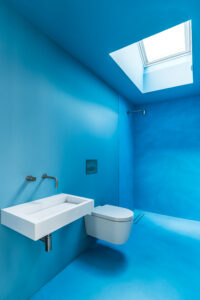
Microcement creates a seamless, grout-free surface, reducing maintenance, chemical use, and long-term environmental impact.
Forcrete’s system-based microcement also provides:
- Structural integrity
- Full waterproofing
- Long-term durability.
Learn more about our professional systems.
Durability and lifespan: the sustainability advantage
Durability is one of the biggest sustainability factors. Short-lived finishes generate repeat waste, extra labour, and additional material use. Long-lasting surfaces naturally reduce environmental impact.
Professional installation ensures that waste is minimised and surfaces last for decades, reducing the need for replacements or repairs.
Forcrete microcement systems deliver:
- High compressive and flexural strength
- Waterproof construction throughout the system
- Resistance to high-traffic residential, commercial, and hospitality environments.
Professional installation ensures microcement performs as intended for decades with minimal maintenance. Find a professional, Forcrete-approved installer near you today.
Waterproof performance and maintenance reduction
Moisture causes many flooring failures. Traditional tiles or decorative coatings often require disruptive repairs once water penetrates.
Forcrete systems achieve waterproof performance through the full system, not just a surface sealer. Benefits include:
- Reduced premature failure
- Lower maintenance requirements
- Extended lifespan of substrate and finish.
Waterproof microcement is ideal for bathrooms, kitchens, wet rooms, and commercial spaces:
Indoor air quality and responsible specification
Sustainability also includes healthy indoor environments. Low VOC microcement systems support better indoor air quality when installed professionally.
For more guidance on VOCs and safe installation, read our informational blog, “Is microcement safe?“
Why system-based microcement matters
Not all microcement delivers sustainability. Decorative or DIY applications often fail due to cracks, delamination, or water penetration, reducing lifespan and increasing waste.
Forcrete approaches microcement as a complete system, supported by:
- Technical guidance based on real-world projects
- Approved installer training for consistent application
- Performance testing in high-traffic and wet environments.
This ensures sustainability is measurable, proven, and reliable.


Microcement in renovation and retrofit projects
Microcement is ideal where environmental impact matters:
- Minimal build-up height preserves existing structures
- Resurfacing avoids demolition and waste
- Reduces disruption to buildings and occupants.
For refurbishment projects, microcement offers a low-waste, long-lasting finish when installed as a professional system.
Microcement vs polished concrete and other finishes
When specifying finishes, it’s important to compare microcement with other common surfaces such as polished concrete and tiles. The key sustainability and performance factors include material use, waterproofing, lifespan, maintenance, and environmental impact.
| Feature | Microcement | Polished concrete | Tiles |
| Thickness | 2–5mm | 15–30mm | 10–15mm |
| Reuse potential | High – can be applied over existing substrates | Low – often requires new slabs or structural work | Medium – tiles may be reusable, but are usually damaged during removal |
| Waterproof performance | Yes – system-based waterproofing throughout | Optional – often requires additional sealers | No – grout can fail, leading to leaks |
| Maintenance requirements | Low – seamless, easy to clean | Medium – may require polishing or sealing | High – grout cleaning and repair, potential tile replacement |
| Durability & lifespan | Decades with professional installation | Decades, but cracking possible | Moderate – tiles prone to cracking, grout failure, and replacement cycles |
| Lifecycle environmental impact | Low – minimal material use, reduced demolition, long lifespan | Medium – energy-intensive polishing, potential slab replacement | High – raw material demand, adhesive/grout use, higher maintenance, more frequent replacement |
Microcement’s minimal material use, waterproof performance, and durability consistently outperform tiles and often polished concrete in both sustainability and lifecycle impact.
For refurbishment and retrofit projects, microcement allows low-waste installation over existing surfaces, reducing demolition and new material demand, while delivering a long-lasting, low-maintenance finish.
Frequently asked questions
Is microcement eco-friendly?
Yes. Professionally installed microcement reduces waste, requires fewer replacements, and supports healthier indoor environments.
Is microcement more sustainable than tiles?
In most cases, yes. Reduced demolition, fewer grout repairs, and longer service life make microcement the sustainable choice.
Does microcement reduce construction waste?
Significantly. Resurfacing avoids tile, screed, or stone removal, cutting waste and material demand.
How long does microcement last?
Decades. Lifespan depends on system design, waterproofing, and installer expertise.
Does waterproof microcement improve sustainability?
Yes. Waterproof systems reduce premature failures, limit maintenance, and extend the life of floors and walls.
Final thoughts
Microcement sustainability comes from system-based installation, durability, and professional expertise, not just surface appearance. When architects and contractors specify Forcrete professional systems, they reduce waste, extend service life, and create healthier, lower-impact spaces.
Sustainability is measurable, and Forcrete ensures every installation delivers it in practice, not just theory.
Get in touch today to start your sustainable microcement journey.