
When renovating a listed building or period home, the challenge is to combine modern performance with the architectural integrity of the original structure. At Forcrete, we regularly work with homeowners, architects and conservation specialists who are looking for seamless, waterproof surfaces that respect traditional building methods.
One of the most common questions we hear is:
Can you use microcement in a heritage property or a listed building?
Yes, you can. With the proper preparation and a sympathetic approach, microcement can be an excellent solution for modernising interiors without compromising character.
Why microcement suits period homes and listed buildings
Microcement is a highly versatile surface system. It delivers a smooth, continuous finish across floors, walls, wet rooms and joinery. But its advantages are not limited to aesthetics. In heritage settings, its thin profile, flexibility, and adaptability make it a practical choice where many modern materials would not be suitable.
Benefits of using microcement in heritage renovations:
Minimal build-up thickness (2–3mm)
Ideal when you are unable to alter floor levels, skirting heights or architectural details.
No need for grout lines or joints
Maintains visual simplicity while minimising the areas where dirt and moisture can accumulate.
Lightweight and crack-resistant
Can be applied over existing surfaces, including original screeds, with the use of the correct primer.
Natural, muted finishes
Complements lime plaster, exposed timber, stone and traditional architectural details.
Custom colour blending
Allows designers to match microcement tones to original features or paint schemes.
Is microcement breathable?
One of the primary considerations in period properties is how finishes interact with moisture. Older buildings use breathable materials, such as lime plaster, which allows walls and floors to release trapped moisture naturally.
Microcement, as a resin-based system, is not fully vapour-permeable. However, when used correctly, it can work in harmony with breathable substrates.
This involves:
- Applying it over a stable, moisture-tolerant base such as cement board or lime-based plasters
- Using a breathable primer where required
- Avoiding moisture-trapping layers beneath the surface.
At Forcrete, we advise case-by-case assessments for heritage settings. Not every area of a listed building will be suitable for microcement, but many can accommodate it with careful planning and detailing.
Our range of professional installers offers technical support to guide substrate preparation and compatibility.
Is microcement reversible?
In listed properties, reversible finishes are often preferred by planning officers. These are materials that can be removed without permanently affecting the original structure.
Forcrete microcement systems are installed over a primer and base coat, without chemically bonding to the historic fabric beneath. This means they can be removed by trained professionals if required, which helps satisfy many conservation guidelines.
In bathrooms, kitchens and utility spaces where a cleanable, hygienic surface is required, microcement provides a low-impact alternative to tiles or cement-based screeds. You can learn more about suitable microcement bathroom applications on our website.
Typical applications in period homes
We have worked on numerous heritage projects where microcement has enhanced, rather than competed with, the original design. Popular uses include:
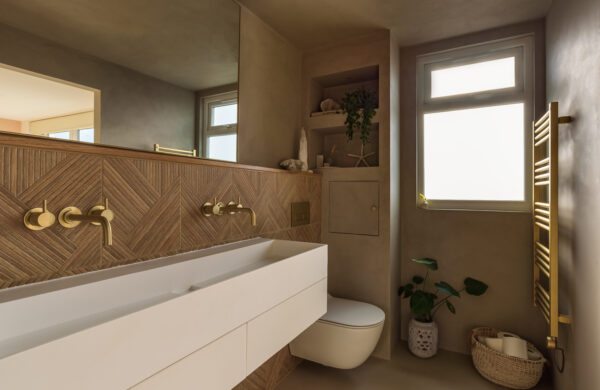
Bathroom renovations in Victorian or Georgian properties
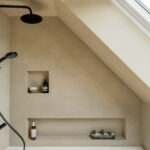
Microcement wet rooms with glass panels, brassware and neutral tones.
Converted barns or farmhouses
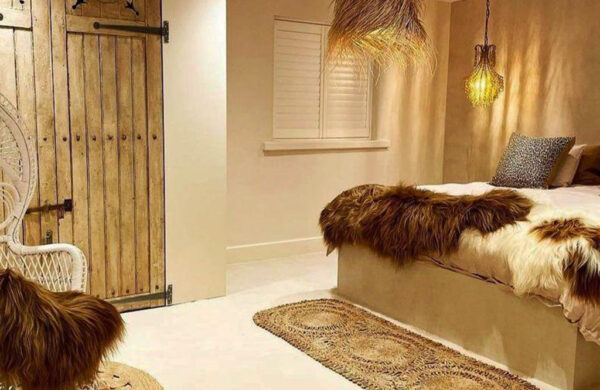
Floors and walls finished in warm grey or stone colours that sit comfortably next to exposed beams.
Kitchen upgrades in listed buildings
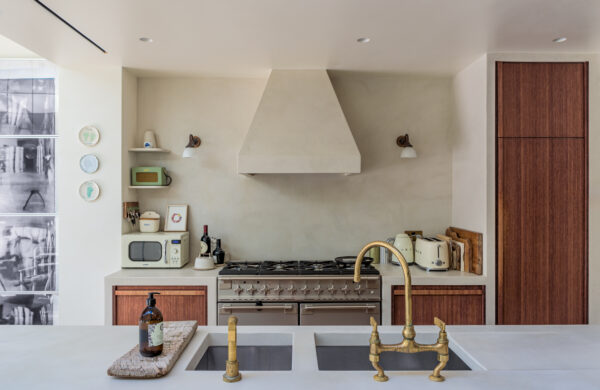
Worktops, splashbacks and floors installed over existing surfaces to minimise disruption.
Feature walls in entrance halls or stairways
Providing texture and visual interest while staying true to the building’s style.
Working with conservation officers
Every listed building is unique, and permission may be required for internal works, depending on its grade and local authority regulations. We always recommend:
- Engaging with a conservation officer early in the process
- Using detailed samples and mock-ups to show how microcement will appear in context
- Providing information about reversibility, material build-up, and how the system protects or avoids altering existing finishes.
If you need support or access to samples, speak to our Forcrete-approved installer network. They understand how to deliver finishes that are compliant, appropriate, and architecturally sensitive.
FAQs: Microcement for period homes and listed buildings
Will microcement damage the original structure?
Not if installed correctly. Forcrete systems are applied over prepared substrates and do not require structural changes or deep excavation. In many cases, they can be installed over existing tiles, screeds or boards.
What colours of microcement suit period properties?
Neutral tones, such as warm greys, clay, taupe, or off-white, often blend best in older homes. Forcrete colour options can be customised to suit the character and materials of your space.
Blending old with new
Microcement offers a contemporary solution for heritage renovations that demand sensitivity and precision. At Forcrete, we work closely with designers and installers to ensure every application meets the specific needs of the building, whether it is a Grade II-listed townhouse or a rural stone cottage.
If you are planning a restoration and want to introduce modern surfaces that do not compromise the building’s integrity, speak to our technical team or one of our approved installers. We are here to help you make the right decisions at every stage of the project.
Contact Forcrete to learn how we can support your heritage renovation with professional microcement solutions.