Microcement feature walls are becoming a defining element in modern interior design. Offering a seamless, textured finish, microcement walls create striking focal points without the need for tiles, panels or visible joins.
From bathrooms to living spaces, this versatile surface is specified by designers and architects seeking clean lines, material continuity, and a more refined architectural feel.
At its core, microcement is not simply a decorative finish. It is a high-performance system that combines durability with design flexibility, making it particularly well-suited for feature wall applications in both residential and commercial spaces.
What are microcement feature walls?
Microcement feature designs are seamless wall finishes created using a thin, multi-layer coating system. Applied by hand, microcement forms a continuous surface with subtle tonal variation and texture.
Unlike traditional wall finishes such as tiles, panels or wallpaper, microcement walls:
- Have no grout lines or joints
- Create a smooth, uninterrupted appearance
- It can be applied to a wide range of surfaces.
Despite its strength, microcement is typically only around 3mm thick, making it ideal for new builds and renovation projects.
Why choose microcement for feature walls?
Microcement walls are increasingly chosen not just for how they look, but for how they perform in real spaces.
Seamless finish without visual breaks
Microcement walls create a continuous surface that enhances spatial flow, particularly effective in open-plan layouts or smaller rooms where visual interruptions can make a space feel fragmented.
A modern alternative to traditional wall finishes
Compared to tiles or panels, microcement offers a more refined and architectural finish. There are no grout lines to maintain and no repeated patterns, allowing the wall to feel more natural and considered.
Depth, texture and natural variation
Each microcement wall design is hand-finished, resulting in subtle tonal movement that gives walls a depth flat paint or wallpaper cannot replicate.
Suitable for a wide range of environments
Microcement walls are ideal for bathrooms, kitchens, living areas and commercial interiors. When installed as a complete system, they can also be fully waterproof, making them suitable for wet areas.
For a deeper look at system performance and applications, explore the Forcrete microcement systems.
Microcement feature walls vs tiles
One of the most common comparisons is between microcement feature walls and tiled surfaces.
While microcement and tiles can both create feature walls, they deliver very different results.
Microcement feature walls:
- Seamless finish with no grout lines
- Continuous surface across large areas
- More contemporary, design-led appearance
- Easier to maintain visually.
Tiled feature walls:
- Visible joints and grout lines
- Repetitive patterns
- More traditional aesthetic.
For many modern interiors, microcement creates a cleaner, more cohesive aesthetic.
Microcement feature wall ideas for modern interiors
Living room feature walls
Microcement wall finishes are often used in living rooms to create a focal point behind sofas or media units. Soft neutral tones help anchor the space without overwhelming it.
Microcement bathroom walls
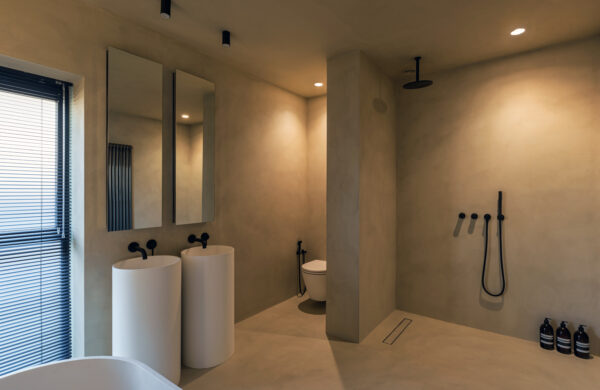
Bathrooms are one of the most popular applications for microcement walls. The seamless finish eliminates grout lines, resulting in a cleaner, more refined aesthetic.
In shower areas, fully waterproof systems allow microcement to function as both a design and performance surface.
Kitchen feature walls
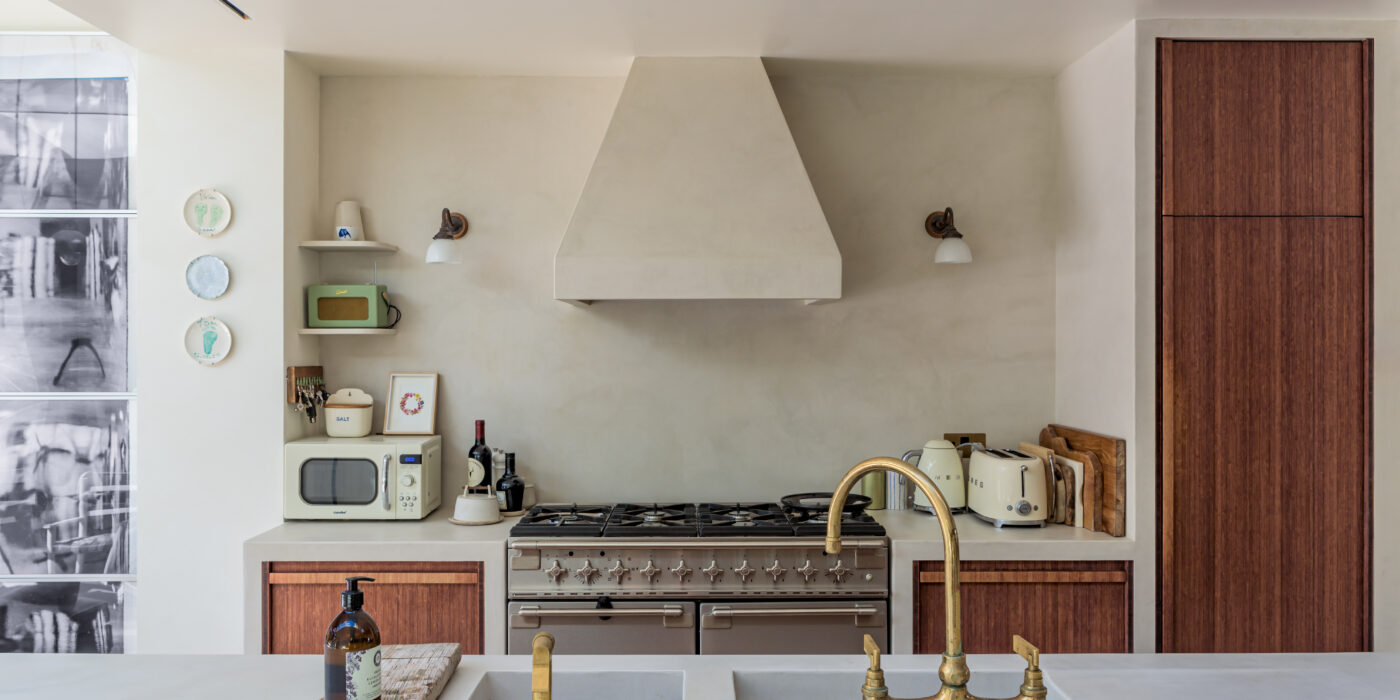
In kitchens, microcement walls can complement worktops and cabinetry, helping to create a cohesive, continuous design across surfaces.
Bedroom feature walls
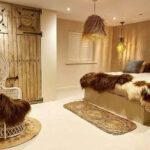
In bedrooms, microcement is often used to create subtle, calming feature walls behind beds. Its muted tones and soft texture support a more relaxed environment.
Commercial feature walls
Retail, hospitality and workspace interiors benefit from the durability and visual impact of microcement walls. They are frequently used to create statement surfaces that still feel refined and professional.
Types of microcement feature wall finishes
Microcement feature walls can be tailored with different finishes and textures to achieve the desired outcome.
Smooth microcement walls
A refined, polished finish is often used in modern and minimalist interiors.
Lightly textured finishes
Adds depth and character while maintaining a clean overall look.
Matte and natural finishes
Softens light reflection and creates a more understated, contemporary feel.
To explore available colours and finishes, view the Forcrete microcement colour collection.
Where to use microcement walls in your home
Microcement walls can be applied to a wide range of surfaces, including:
- Plaster and drywall
- Concrete and cement-based substrates
- Existing tiles (with correct preparation)
This makes microcement particularly valuable in renovation projects where removing existing materials is not always practical.
For best results, working with experienced applicators is essential. You can find approved specialists via the Forcrete installer network.
How microcement walls enhance modern interior design
Microcement feature walls contribute to more than just aesthetics. They influence how a space feels and functions.
- They help smaller spaces feel larger by removing visual breaks
- They create a consistent material palette across walls and floors
- They allow light to interact with texture, adding depth without clutter.
As a result, microcement is increasingly specified in projects where simplicity, cohesion and material quality are key priorities.
Frequently asked questions
Are microcement feature walls waterproof?
When installed as part of a complete system, microcement walls can be fully waterproof, making them suitable for bathrooms and wet areas.
Can microcement be applied to existing walls?
Yes, microcement can be applied to prepared surfaces, including plaster, concrete and tiles, making it ideal for renovation projects.
How durable are microcement feature walls?
Microcement is designed to be highly durable and wear-resistant when installed correctly as part of a complete system.
Are microcement feature walls expensive?
Costs vary depending on the size of the area and specification, but microcement is generally positioned as a premium, design-led finish.
How do you clean microcement walls?
Microcement walls are low-maintenance and can be cleaned with non-abrasive cleaning products.
Can microcement be used on chimney breasts or feature areas?
Yes, microcement is commonly used on chimney breasts and architectural features to create a focal point within a room.
Do microcement walls need sealing?
High-quality systems include protective layers as part of the full specification, ensuring durability and performance.
Are microcement walls suitable for UK homes?
Yes, microcement is widely used in UK residential and commercial projects for its versatility and performance.
Final thoughts
Microcement feature walls represent a shift towards more refined, seamless interiors. Rather than layering multiple materials, they simplify surfaces, allowing texture, tone, and light to define a space.
As modern design continues to prioritise cohesion and material consistency, microcement remains one of the most versatile and forward-thinking solutions available.
To contact us about your next microcement project, get in touch today.