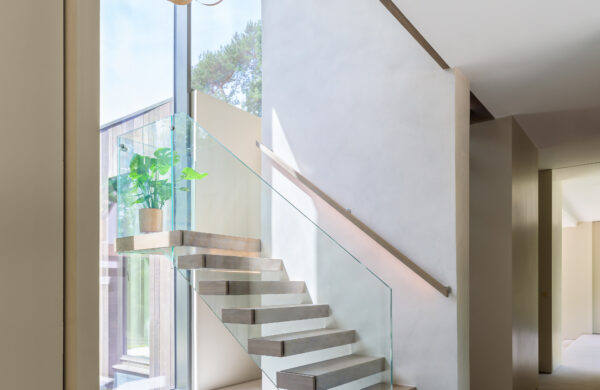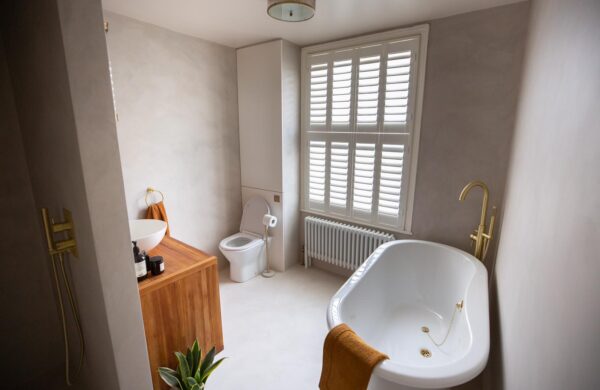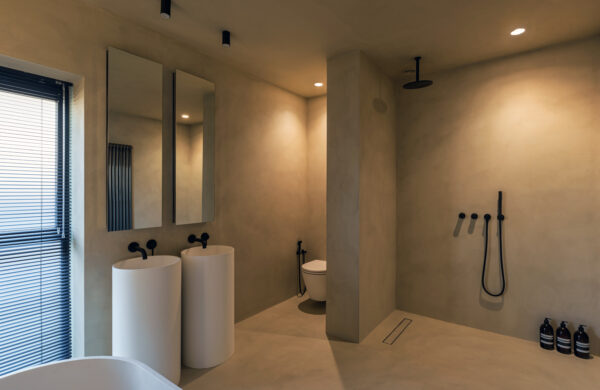

When specifying a seamless surface, the thickness is often one of the first technical questions architects, designers and homeowners consider.
Unlike many traditional finishes, microcement achieves a refined concrete-inspired appearance without requiring significant depth. This low-profile finish is one of the reasons it has become increasingly popular across modern renovations, architectural interiors and commercial spaces.
So, how thick is microcement?
A professionally installed microcement system is typically 2-3 mm thick once complete.
However, this measurement refers to the complete finished system rather than a single layer of material. Microcement achieves its performance through a carefully developed build-up, with each layer contributing to the final strength, texture and appearance of the surface.
Through working with professional installers, designers and specifiers, we understand that thickness is often linked to wider project considerations.
Clients want to know how a finish will affect existing floor levels, whether it can be used across different areas and how it will perform long after installation.
This is why microcement should always be viewed as a complete system rather than simply a thin decorative coating.
What is the standard thickness of microcement?
A complete microcement system is generally installed at a thickness of approximately 2-3 mm.
This minimal build-up is one of the key advantages of microcement, particularly in renovation projects where maintaining existing architectural details is important.
Unlike materials such as stone, porcelain tiles, or concrete, which often require additional structural depth, microcement creates a seamless finish without significantly altering a space’s dimensions.
The final thickness is achieved through several carefully applied layers, including:
- Primer to prepare the substrate and improve adhesion
- Base coats to create stability and strength
- Decorative coats to achieve the chosen texture and finish
- Protective finishing layers suited to the environment.
Although the finished surface is only a few millimetres thick, every stage contributes to the system’s overall performance.
Why can microcement be so thin while remaining durable?
The performance of microcement does not come from thickness alone.
Traditional materials often rely on their physical depth to provide their structure and appearance. Microcement works differently. Its strength comes from the combination of advanced formulations, specialist application techniques and the interaction between each layer of the system.
This allows microcement to provide a durable, seamless surface while maintaining an exceptionally low profile.
The benefit of this becomes particularly clear during refurbishment projects. A thinner finish can help preserve existing features, minimise disruption and allow spaces to be transformed without extensive structural changes.
Forcrete’s professional systems are developed with these practical considerations in mind, giving installers the flexibility to create high-performance surfaces across residential and commercial environments.
Find and speak with a professional Forcrete-approved microcement installer near you today.



Does microcement thickness affect performance?
When selecting any surface finish, thickness is an important consideration. However, with microcement, increasing the number of millimetres does not automatically improve performance.
The quality of the finished surface depends on the complete specification, including:
- The chosen microcement system
- Substrate preparation
- The environment where it will be installed
- The expertise of the installer
- The appropriate protective finish.
A bathroom, kitchen floor and commercial space will each have different requirements, which is why professional specification is so important.
The role of an experienced installer is to understand these factors and ensure the correct system is applied for the intended use.
How does microcement thickness affect design detailing?
One of the biggest advantages of microcement’s low-profile finish is the design flexibility it creates.
Because the finished system adds only a few millimetres, architects and designers have greater freedom when detailing spaces. This is particularly valuable where different materials meet or where maintaining clean architectural lines is important.
Microcement’s minimal thickness can help with:
- Floor transitions between different spaces
- Maintaining existing door clearances
- Creating continuous wall-to-floor finishes
- Designing seamless shower areas
- Updating existing interiors without significant structural changes.
For contemporary interiors, these details often make the difference between a good finish and a truly considered design.
The ability to continue a surface across multiple areas is one of the reasons microcement has become such a popular choice for minimalist and modern interiors.
Does microcement thickness change depending on the application?
While the overall finished thickness remains around 2-3 mm, the system build-up can vary depending on the installation location.
Different applications require different considerations.
A bathroom wall, a kitchen floor and a high-traffic commercial environment will each have different performance requirements.
Professional installers assess the substrate, environment and expected use before selecting the appropriate approach.
This ensures the finished surface delivers both the aesthetic and practical performance expected from microcement.
How thick is microcement flooring?
Microcement flooring is typically around 2-3 mm thick once completed.
Floor applications require careful consideration because surfaces must withstand everyday use, furniture loads and natural movement within a building.
The low thickness of microcement makes it particularly suitable for renovation projects where raising floor levels is not desirable. It can also work effectively alongside underfloor heating systems because the thin surface allows efficient heat transfer.
Read more about this in our guide to why microcement is ideal for underfloor heating systems.
How thick is microcement on walls?
Wall applications typically require a less complex build-up than flooring because they are not exposed to the same levels of impact.
This allows microcement to create refined surfaces across:
- Feature walls
- Bathroom walls
- Shower areas
- Commercial interiors
- Bespoke architectural details.
The minimal depth allows designers to create large, uninterrupted surfaces without introducing unnecessary bulk.
Find out more about microcement wall ideas here.
Is microcement thick enough for bathrooms and wet rooms?
Yes. The suitability of microcement for bathrooms is determined by the complete system specification, not by thickness alone.
A properly installed microcement system can deliver the performance required in wet environments while maintaining the seamless aesthetic that makes it so popular.
One of the biggest advantages of microcement bathrooms is the ability to eliminate traditional grout lines, creating a cleaner, more continuous finish.
Forcrete systems are engineered as complete solutions, providing waterproof performance throughout the system rather than relying only on a surface coating.
Discover more about bathroom applications in our guide to microcement bathrooms.
Can microcement be installed over existing tiles?
In many renovation projects, microcement can be applied over existing tiles where the substrate is suitable and correctly prepared.
This is one of the practical benefits of the material. The low-profile finish allows spaces to be updated without removing existing surfaces, helping reduce unnecessary disruption.
A professional installer will assess the condition of the existing surface before installation to ensure the correct preparation process is followed.
Is thicker microcement better quality?
A thicker application does not automatically mean a better-quality microcement finish.
The performance of microcement comes from precision rather than simply adding more material.
A high-quality result depends on:
- The right system specification
- Correct preparation
- Professional application
- Attention to finishing details.
This is why choosing an experienced installer is such an important part of the process.



Why the thin profile of microcement makes it ideal for modern interiors
The appeal of microcement comes from its ability to combine visual impact with practical flexibility.
Its minimal thickness allows designers to create:
- Seamless transitions between spaces
- Consistent finishes across multiple surfaces
- Contemporary architectural details
- Refined interiors without unnecessary structural changes.
From residential bathrooms and kitchens to hospitality and commercial environments, microcement provides a versatile solution where both aesthetics and performance matter.
Explore different textures and appearances in our guide to understanding microcement finishes.
Frequently asked questions about microcement thickness
How many mm thick is microcement?
Microcement is generally installed at around 2-3mm thick once the complete system has been applied.
Does microcement raise floor levels?
Microcement usually adds only a few millimetres to an existing surface, making it suitable for many refurbishment projects where maintaining existing levels is important.
Is microcement thinner than tiles?
Yes. Tiles typically require additional depth from both the tile material and adhesive layer, whereas microcement creates a finished surface of around 2-3mm.
Can microcement be applied over concrete?
Yes. Microcement can be installed over suitable concrete substrates when correctly prepared and assessed.
Can microcement be applied over existing tiles?
Yes. Existing tiles can often provide a suitable base when they are stable and properly prepared.
Does thicker microcement last longer?
Not necessarily. Longevity depends on the quality of the system, preparation and installation rather than thickness alone.
Is microcement suitable for floors with underfloor heating?
Yes. The thin profile of microcement makes it a suitable option for floors with underfloor heating due to its efficient heat transfer properties.
Why microcement thickness is about precision, not just millimetres
When asking “how thick is microcement?” The answer is around 2-3mm.
However, those few millimetres represent a carefully engineered surface system designed to combine aesthetics, performance and flexibility.
The strength of microcement comes from understanding the material, selecting the right system and applying it with precision.
At Forcrete, we believe great microcement is not defined by how much material is used, but by how effectively every layer works together.
With the right expertise, a surface only a few millimetres thick can completely transform the way a space looks, feels and functions.