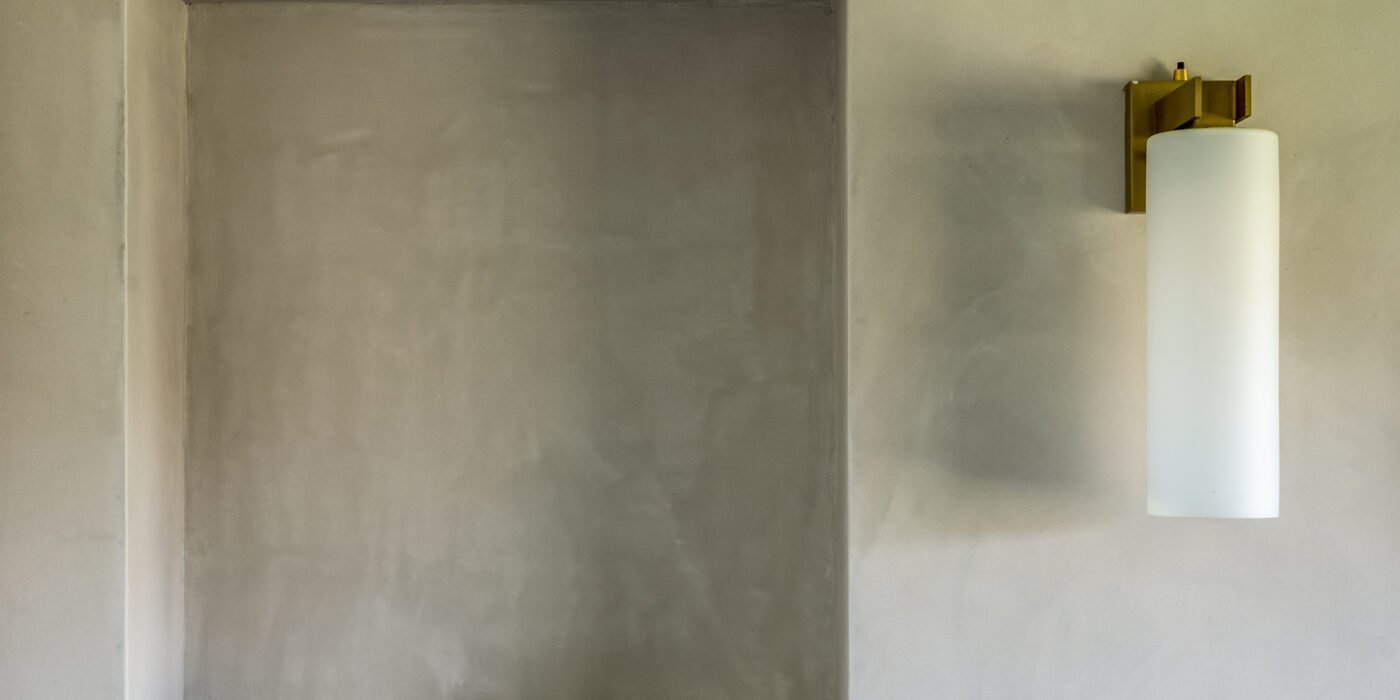
A microcement fireplace creates a clean, contemporary focal point without the visible joints of tiles or the heavier appearance of some traditional surrounds. Its seamless finish works across a range of interior styles, from minimalist living rooms to more characterful spaces.
But appearance is only part of the decision. Before specifying microcement around a fireplace, you need to understand the heat exposure, the existing substrate and whether the complete system is suitable for the proposed application.
This guide covers the design possibilities and the practical considerations to resolve before installation.
Can you use microcement around a fireplace?
Potentially, but suitability depends on the fireplace, the surrounding construction and the microcement system.
A decorative chimney breast away from the heat source presents different conditions from a surface beside a wood-burning stove or gas fire. The type of appliance, its installation and the temperatures reached at the finished surface all matter.
Before proceeding, establish:
- The heat exposure. Identify the appliance and the temperatures the surrounding surfaces may experience.
- The required clearances. Follow the fireplace manufacturer’s installation instructions. A decorative finish must not compromise these requirements.
- The substrate. The existing surface must be stable, suitably prepared and compatible with the specified system.
- System suitability. Confirm that the complete build-up, including primers, base coats, finish and any protective coating, is suitable for the intended conditions.
Do not assume a microcement product is suitable for every part of a fireplace simply because it performs well on walls or floors.
Forcrete supplies professional microcement systems and provides technical information to support specification. If you are considering a fireplace application, contact an installer near you to confirm suitability before selecting products or starting work.
Microcement fireplace design ideas
The appeal of microcement lies in its ability to create a continuous surface that complements the surrounding architecture. The finish, colour and scale of the feature should work with the room rather than compete with it.
Minimalist fireplace surrounds
A simple microcement surround creates a restrained focal point, particularly in interiors with clean lines and a limited material palette.
Neutral shades can complement timber, stone and natural textures, while a more contrasting colour can give the fireplace greater definition.
Floor-to-ceiling chimney breasts
Extending the finish across the full chimney breast creates a stronger architectural feature and draws the eye upwards.
This approach can work well in rooms with high ceilings, recessed fireplaces or built-in shelving. Careful detailing around openings, corners and adjoining materials helps maintain a consistent finish.
Fireplace and media walls
Microcement can form part of a wider media wall, bringing the fireplace, television and storage into a unified design.
However, the layout must account for the requirements of the fire and any electrical equipment. Ventilation, access and manufacturer-specified clearances take priority over the appearance of a seamless wall.
Colour and texture
Colour and texture influence whether the fireplace blends into the room or becomes its main feature. A subtle finish can complement an understated interior, while a more pronounced texture or darker shade can introduce contrast.
Forcrete offers different microcement products and finishes for specified applications. Explore our guide to microcement finishes to compare textures, surface effects and the factors that influence the final appearance.
Is microcement heat resistant?
Heat resistance depends on the specific product, the complete system and the conditions it will experience. It should not be assumed across all microcement formulations.
It is also important to distinguish between resistance to elevated temperatures and fire performance. A material that tolerates a particular surface temperature is not automatically fireproof or suitable for direct flame exposure.
What about wood-burning stoves and gas fires?
Surfaces near wood-burning stoves and gas fires may experience significant heat. The conditions vary with the appliance, its installation and the distance between the heat source and the finished surface.
Check the appliance manufacturer’s requirements and obtain technical confirmation that the proposed microcement system suits the intended location. Do not reduce required clearances to accommodate a design.
Electric fireplaces also have installation requirements, so their surrounding surfaces need appropriate consideration.
Can microcement go inside a firebox?
Do not assume that a standard decorative microcement system is suitable for a firebox, combustion chamber or surface exposed directly to flames.
These applications require materials and assemblies specifically approved for their operating conditions. Only consider microcement where the complete proposed system has explicit confirmation for that use.
Preparing the surface
The substrate plays an important role in the quality and durability of a microcement finish. The material alone does not determine suitability. Its condition, preparation and compatibility with the selected system matter too.
Before installation, an experienced installer should assess:
- Stability: movement or deterioration in the background can affect the finished surface.
- Condition: dust, contamination, loose material and unsuitable coatings can compromise adhesion.
- Moisture and temperature: the substrate must meet the selected system’s application requirements.
- Junctions and edges: openings, corners and transitions need appropriate detailing.
- System compatibility: all specified layers must work together and suit the intended application.
Forcrete’s microcement product guide provides information about its primers and other system components. The correct specification depends on the background and the project requirements, so use the relevant technical documentation rather than applying a generic build-up.
Where the proposed application involves heat exposure that the published documentation does not address, seek specific technical advice before proceeding.
What does installation involve?
The precise method depends on the selected system and the condition of the existing surface. In general, the process involves four stages.
- Assess the application. Identify the fireplace type, check the required clearances and establish whether the proposed system is suitable.
- Prepare the substrate. Complete the cleaning, repairs, priming and other preparation specified for the background.
- Apply the system. Install the required layers in accordance with the manufacturer’s instructions.
- Complete curing. Allow the surface to cure under the specified conditions before bringing the fireplace into use.
The final stage matters. A surface that feels dry may not have completed its required cure. Follow the product-specific instructions and any additional requirements associated with the fireplace installation.
Microcement is a specialist finish, so professional installation helps ensure that the substrate, materials and application method receive the appropriate attention.
Frequently asked questions
Can you apply microcement over an existing fireplace surround?
Potentially, if the background is stable, suitably prepared and compatible with the chosen system. Its location and heat exposure must also fall within the system’s confirmed suitability.
Can you use microcement around a wood-burning stove?
Only after confirming that the complete system suits the expected conditions and that the stove manufacturer’s clearance requirements can be met. Do not rely on general claims about heat resistance.
Is microcement fireproof?
Do not describe microcement as fireproof without relevant evidence for the specific product or complete system. Fire performance and resistance to elevated surface temperatures are different considerations.
Can microcement crack around a fireplace?
Cracking can occur if the substrate moves, the system is unsuitable or the installation does not account for the conditions. A proper assessment of the background and application is important, although no decorative finish can be guaranteed against every form of movement or damage.
Choosing a microcement fireplace finish
Microcement can create a seamless fireplace surround or chimney breast that complements contemporary and traditional interiors. The most important decision, however, is whether the proposed application suits the conditions the finished surface will experience.
For more inspiration, explore our guide to microcement feature walls for ideas on creating seamless architectural features.
Establish the heat exposure, assess the substrate and confirm the suitability of the complete system before committing to a design.
Forcrete supplies professional microcement systems through an approved installer network. Contact us today to discuss your project and establish the appropriate next steps.